
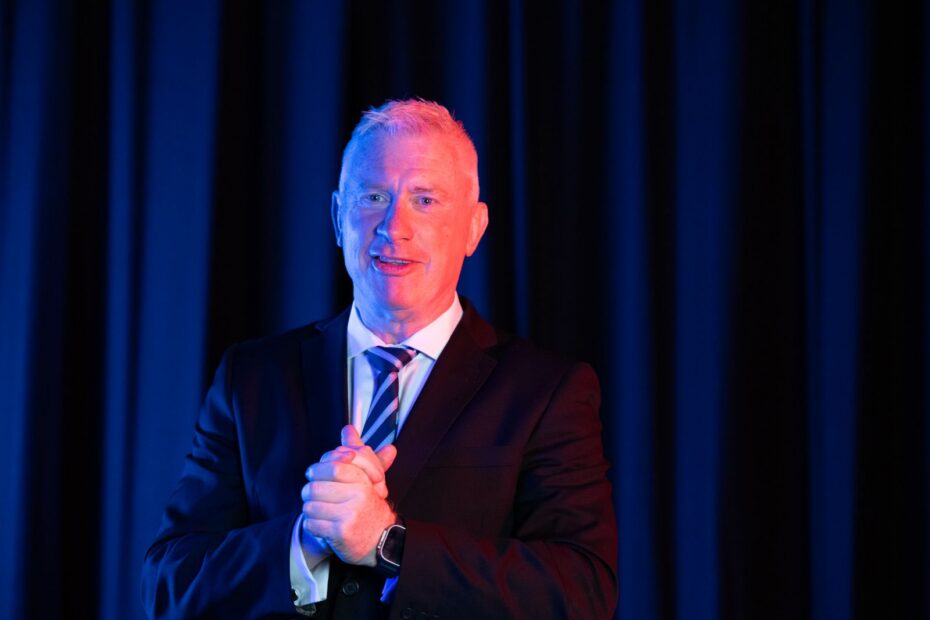
Declan Linnane: Headteacher of Trinity Catholic High School in Woodford Green, Chair of EducareM and Member of the Catholic Union’s Education Committee.
A report published by Teach First this summer says faith schools are overrepresented among schools where persistently disadvantaged pupils achieve highly, but most admit fewer of those pupils than their local authority average. The National Secular Society has used the finding to argue that strong results are likely explained by selection rather than teaching. The NSS has long campaigned against faith schools, so its conclusion was no surprise. But that conclusion goes further than the evidence. It deserves a plain answer. With facts. And with mission.
The measure matters
The Teach First report does not rely on a one-day snapshot. It defines a persistently disadvantaged pupil as one who has been eligible for free school meals for at least 80% of their time in school. That is a serious measure of long-term poverty, and it deserves attention.
But FSM remains a policy-defined proxy. It depends on eligibility rules and a recorded claim. The Department for Education says transitional protections have kept some pupils eligible after household circumstances changed. From September 2026, eligibility expands to all children in families receiving Universal Credit. The number changes when the rules change. FSM tells us something important. It does not tell us everything.
The Catholic Education Service brings in another measure: the Income Deprivation Affecting Children Index, or IDACI. It measures the proportion of children aged 0 to 15 living in income-deprived families in the small area containing each pupil’s home. It is based on pupil residence, not the school postcode.
The latest CES figures say Catholic schools educate 51.5% more pupils from the most deprived backgrounds than state-funded schools. An earlier published breakdown put just under a fifth of pupils in Catholic schools in the highest deprivation band, against a 12.8% England average. It also found a quarter fewer pupils from the most affluent areas attending Catholic schools.
These figures answer different questions. Teach First looks at 33 high-performing faith secondary schools and compares their intakes with local authority averages. CES looks across the Catholic sector and at the areas where pupils live. The Teach First subset cannot carry a verdict on Catholic education as a whole. The CES data does not remove the duty to scrutinise individual admissions policies. A serious debate holds both facts together.
Catchment is not selection
CES says Catholic schools have geographical catchment areas around ten times larger than other schools. Many draw from several parish communities, and parish networks do not always follow local authority boundaries.
That matters because Teach First compares each school’s intake with its local authority average, not with a mapped school catchment or parish network. If the comparator does not match the population a school serves, a gap is a signal worth investigating. It is not proof of admissions filtering.
Diversity matters too
The latest CES census records 817,784 pupils in 2,074 Catholic schools in England. Almost half, 47.2%, are from ethnic minority backgrounds, compared with 38.7% across the state sector. More than 349,000 pupils in Catholic schools are not Catholic.
Ethnic diversity is not the same as economic deprivation. But it matters when Catholic schools are portrayed as closed or socially narrow communities. The national data shows a system serving families from a wider range of backgrounds than its critics often admit.
Correlation is not explanation
Teach First identified 88 of 2,554 state-funded mainstream secondary schools where persistently disadvantaged pupils achieved a higher average grade in English and maths than non-disadvantaged pupils nationally. Of those 88 schools, 56 were in London, 33 were faith schools, 32 were single-sex schools and eight were grammar schools. Several characteristics overlapped.
The 88 were not a uniform group with low deprivation. Their average FSM rate was 29.6%, above the 26.6% average across the schools in the dataset. Persistent disadvantage ranged from 4.3% to 50%, while FSM eligibility ranged from 9% to 65.1%. Teach First’s own conclusion is clear: strong outcomes were not confined to schools with very low overall disadvantage.
Faith schools made up 37% of the 88, against 18% of secondary schools nationally. In only five of those 33 faith schools did the proportion of persistently disadvantaged pupils meet or exceed the local authority average. That is a legitimate challenge. We should answer it, not dismiss it.
But Teach First’s wording matters. It says admissions practices “may” play a role. It does not say they caused the results. The report also says the finding “does not diminish the success of these schools” for the persistently disadvantaged pupils they serve.
The NSS turns “may play a role” into “likely explained”. The study does not establish that. Its published analysis groups faith schools together and does not present a Catholic-only causal result. It does not test the effect of teaching, curriculum, attendance, behaviour, leadership or staff stability. Correlation warrants scrutiny. It is not a verdict.
CES also reports that Catholic schools outperform national GCSE averages in English, maths and Religious Education by up to seven percentage points while serving a higher proportion of pupils from the most deprived areas. That does not prove Catholic ethos caused the results. It does make a single-cause explanation based on selection much harder to sustain.
Our mission was never selective
Catholic schools in this country were built by poor migrant communities who had little else, to educate children the state had failed. That purpose has not changed. Catholic Social Teaching calls us to a preferential option for the poor, not a preference for the comfortable. Any Catholic school quietly filtering out the pupils who cost more to support has forgotten why it exists. Where the evidence shows that happening, it deserves scrutiny. Ours included.
Mission visible in practice
The CES child poverty survey gathered evidence from more than 2,000 Catholic schools in England and Wales. It found that 94% provide help with school uniform costs and 77% operate breakfast clubs. More than 90% reported families struggling with the cost of living, 70% said conditions had worsened over the previous year, and 88% saw a strong link between poverty and poor mental health.
Those figures are not an admissions measure. They are evidence about the communities Catholic schools serve and the work they do once children come through the gate. Poverty is not an abstract category in these schools. It is present at breakfast, in uniform banks, in food referrals, in pastoral offices and in the daily choices leaders make to keep children included.
Education is not a side interest of the Church. It is her mission.
This is what an admissions table cannot measure. Catholic schools are not a commercial add-on chasing the best-performing intake. Education is one of the Church’s founding purposes, older than the state’s involvement in schooling by centuries.
Canon law says plainly what education is for. Canon 795:
“Since true education must strive for complete formation of the human person that looks to his or her final end as well as to the common good of societies, children and youth are to be nurtured in such a way that they are able to develop their physical, moral, and intellectual talents harmoniously, acquire a more perfect sense of responsibility and right use of freedom, and are formed to participate actively in social life.”
The whole person. The common good. Not a formation reserved for children who arrive already advantaged.
A mission stated in those terms cannot be squared with sorting out the pupils who are expensive to educate. It is a mission to form every child entrusted to us. Whatever they arrive with. Whatever it costs. Judge us against that standard, not a spreadsheet of postcodes.
This speaks directly to the children the debate is really about: those with SEND, and those in poverty. Pope Francis makes the link explicit in Fratelli Tutti:
“Yet the same rule clearly does not apply to a disabled person, to someone born in dire poverty, to those lacking a good education and with little access to adequate health care. If a society is governed primarily by the criteria of market freedom and efficiency, there is no place for such persons, and fraternity will remain just another vague ideal.”
And on the exclusion those children carry into every institution they enter, schools included:
“Many persons with disabilities ‘feel that they exist without belonging and without participating.’ Much still prevents them from being fully enfranchised. Our concern should be not only to care for them but to ensure their active participation in the civil and ecclesial community.”
Put simply: a system judged only on efficiency will always find a reason to have less room for the child with SEND, and less room for the child in poverty. A Catholic school is judged by a different standard. If our admissions, or our culture, ever left a child feeling they existed “without belonging,” that is a failure against our own teaching. Not a footnote to it.
What we should take from this
Faith schools should welcome scrutiny of admissions. We should also insist on accurate measures and honest claims. Teach First identifies a representation gap among a small and unusual group of high-performing faith schools. It does not prove that Catholic schools secure strong results by excluding the poor.
Where an admissions policy creates an unintended barrier for a poor family, change it. But do not erase the Catholic schools rooted in deprived communities, the much higher IDACI intake across the sector, the diversity of the pupils they educate, or the practical support they provide every day.
Measure us honestly, and the verdict changes. We did not open our doors to the poor because a spreadsheet told us to. We did it before anyone was counting, and we will keep doing it after this report is forgotten.
Declan Linnane is Headteacher of Trinity Catholic High School in Woodford Green and Chair of EducareM. He has thirteen years’ experience as a headteacher, including leading a failing school to an outstanding judgement with strong Progress 8 outcomes. He holds an MA in Catholic School Leadership from St Mary’s University, Twickenham, where his research focused on how to embed Catholic Social Teaching across the full school curriculum. His leadership places that teaching at the centre of school culture, ethos, curriculum, character formation and strategy.
Sources
Teach First, Class dismissed: Closing the gap for persistently disadvantaged pupils (June 2026), with analysis commissioned from the Education Policy Institute.
National Secular Society, Research: High-performing faith schools admit fewer deprived pupils (23 June 2026).
Catholic Education Service, Catholic school staff are the most ethnically diverse in England – survey (9 June 2025).
Catholic Education Service, Child poverty in England and Wales: survey report (15 January 2025).
Catholic Education Service, Statement on inaccurate Sutton Trust ‘Selective Comprehensives’ research (11 January 2024).
Department for Education, Free school meals: guidance for schools and local authorities (updated 30 June 2026).
Department for Education, Free school meals expansion to all children in families receiving Universal Credit.
Ministry of Housing, Communities and Local Government, English indices of deprivation 2025.
The Holy See, Code of Canon Law, canon 795.
Pope Francis, Fratelli Tutti (2020), paragraphs 98 and 109.